GUIDE
What is a credit book, and how to keep one for your shop
A credit book is the list of customers who took goods and will pay later. Many shops call it the debt book, and it is also called a debtors book or khata. It protects you from the most common loss in a small shop: credit nobody wrote down, so nobody paid.
Updated 7 October 2026
The columns
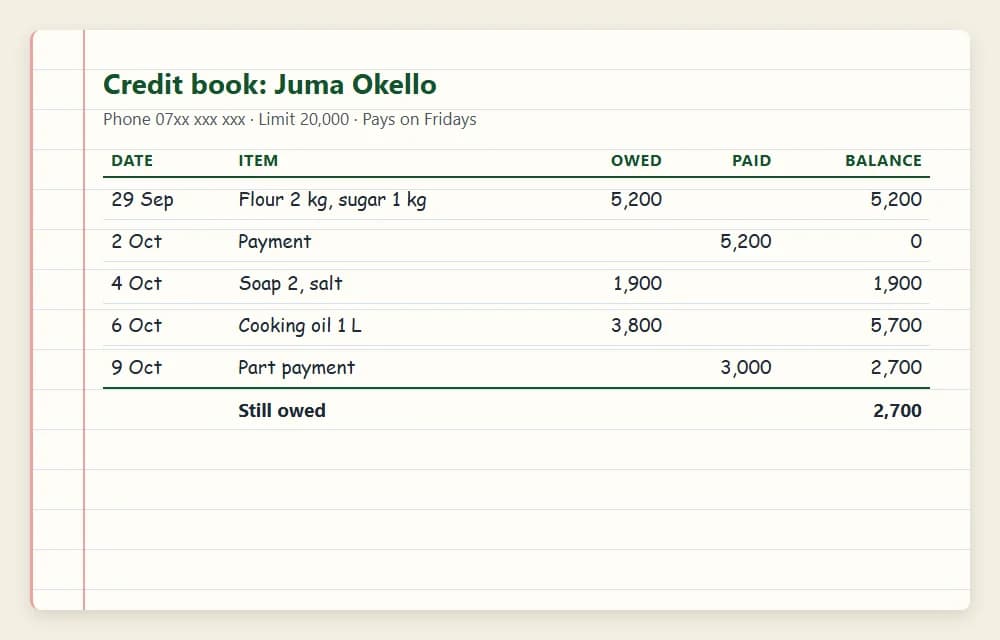
Give each regular customer their own page, with their phone number at the top, and rule these columns: Date, Item, Owed, Paid and Balance. Each time they take goods, add to the balance. Each time they pay, take it away.
Rules that keep credit under control
- Set a limit for each customer and write it at the top of their page.
- Write the credit at the moment it happens, in front of the customer.
- Agree a day to pay, such as the next market day or pay day.
- Give no new credit to someone who has not paid by the agreed day.
- Read the balance back to the customer every time they pay.
The other side: what you owe
Keep a second, smaller book for suppliers who give you stock now and are paid later. Write the date, the goods, the amount and the day you agreed to pay. Paying suppliers on time is how you keep getting goods on credit.
Keeping it on a phone
Apps can keep the credit book for you, add up each balance and show who owes the most. Some also record what you owe suppliers. Our comparison of shop record apps shows which apps do both.