GUIDE
How to do stock taking in a small shop, with an example
Stock taking means counting what is on your shelves and comparing it with what your records say should be there. The difference shows you what was sold without being written, spoiled, or taken.
Updated 7 October 2026
Before you count
- Choose a quiet time: before opening or after closing.
- Have your last count, the goods you bought since, and your sales records ready.
- Count one shelf at a time, left to right, and write as you go.
The calculation
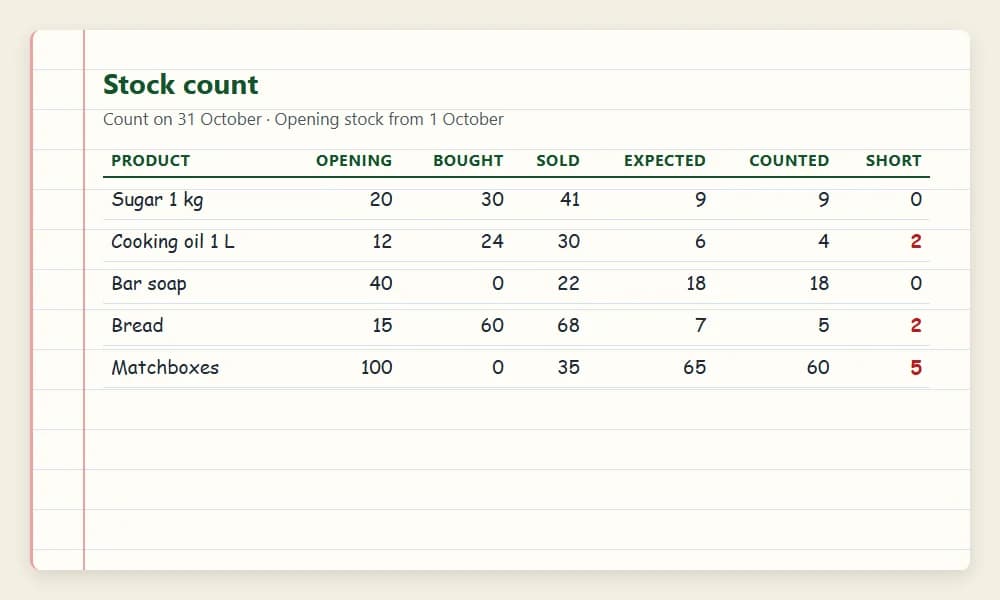
For each product: opening stock, plus what you bought since, minus what you sold, is the stock you expect. Then count what is really there. Expected minus counted is the shortfall.
A worked example
Sugar and soap match. Two bottles of oil and two loaves of bread are missing, and five matchboxes are short, which often means small sales were not written. Oil is the costly one: find out whether those two bottles were sold without a record, given on credit and not written, or taken.
How often to count
Count fast-moving and costly goods every week, and everything once a month. A count you can trust tells you how much to buy, because you stop buying what does not sell.
Doing it with an app
An app that counts stock down as you sell gives you the expected figure without the sums, so you only count and compare. Our comparison of shop record apps shows which apps keep a stock count and warn when an item runs low.