GUIDE
How to calculate profit in a small shop
Sales are not profit. Profit is what is left after paying for the goods you sold, and then for running the shop. Knowing both numbers tells you whether the shop is really making money.
Updated 7 October 2026
Step 1: gross profit
Gross profit is your sales minus what the goods cost you. If you sold sugar for 1,200 a kilo and bought it for 1,000, the gross profit on each kilo is 200.
Step 2: what is left after running costs
Take away the costs of running the shop for the same period: rent, transport, electricity, airtime, a helper's pay. What remains is what the shop earned for you. Money you take home is not a cost of the shop. It is your share, taken from what is left.
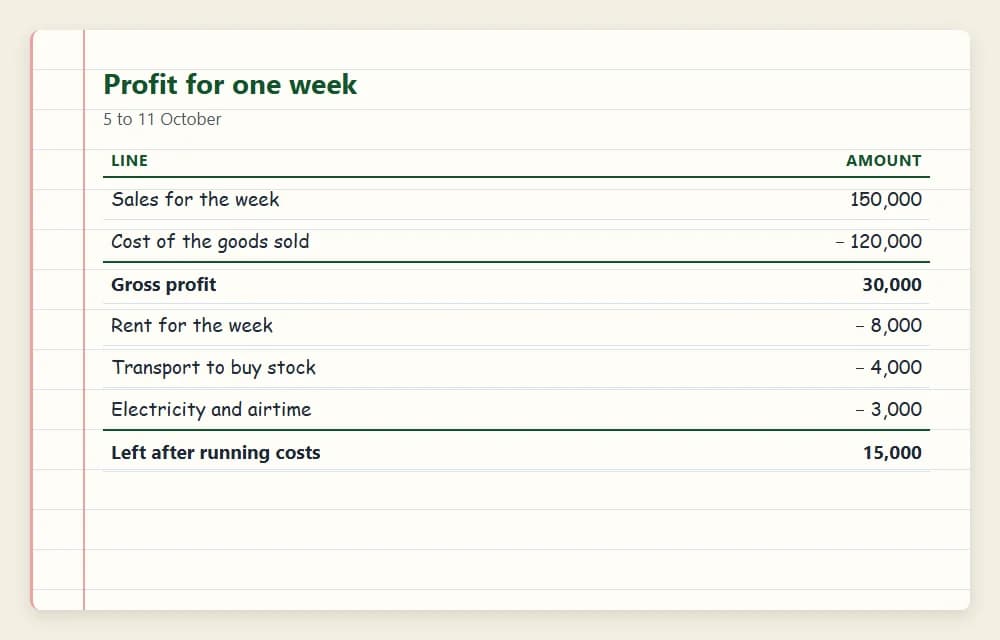
A one-week example
The shop sold 150,000 but earned 15,000 for its owner that week. If the owner took 20,000 home, the shop is shrinking, even though sales looked good.
Mistakes that hide a loss
- Counting money taken home as profit.
- Forgetting goods you used at home or gave away.
- Counting credit sales as cash before they are paid.
- Not knowing what each item cost, so the cost line is a guess.
Let the record do the sums
When every sale and every purchase is written with its cost, gross profit comes from the records, not from memory. Most shop record apps show it for you. Our comparison of shop record apps shows which ones keep reports.