GUIDE
How to keep records in a small shop
Good records answer four questions at the end of every day: what did I sell, what is left on the shelf, who owes me money, and whom do I owe. You can keep them in a notebook or on a phone. What matters is that you write every sale when it happens, not from memory at night.
Updated 7 October 2026
The four records a small shop needs
- Sales record: every sale, the time, what was sold, how many, the price, and whether the customer paid now or will pay later.
- Stock record: what you have of each product, what came in, and what went out.
- Credit book: each customer who owes you, how much, from which day, and each payment they make. How to keep a credit book.
- Money out: what you paid suppliers, rent, transport, electricity, and money you took home.
A daily sales record, line by line
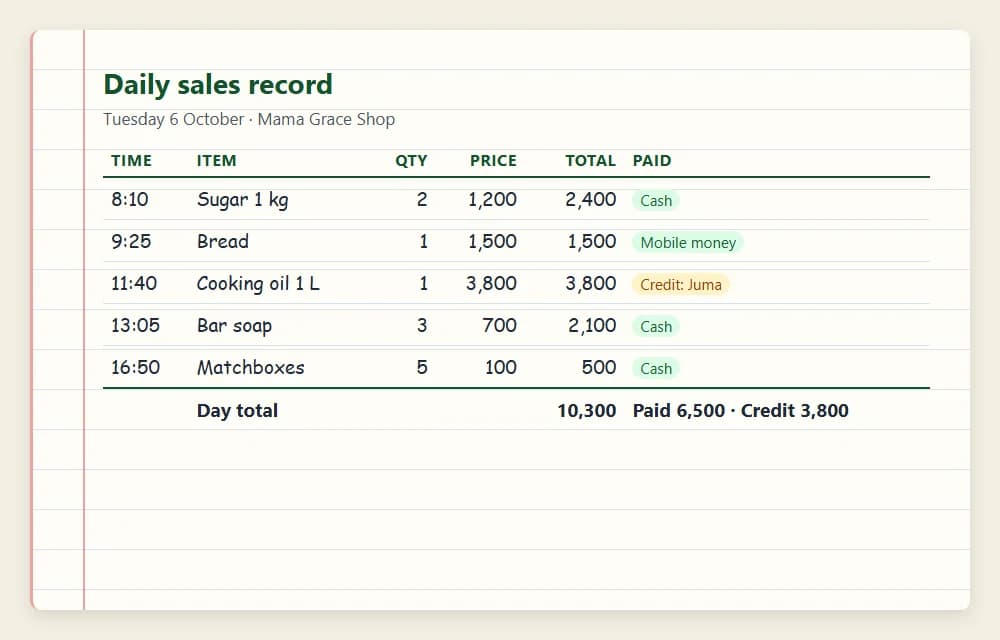
Rule a page with these columns: Time, Item, Quantity, Price, Total, and Paid or Credit. Write one line per sale. At closing, add up the Total column. Then count the cash in the drawer and the mobile money you received. Cash plus mobile money should equal the paid sales. If it does not, you have found a mistake today, while you still remember the day.
Close each day in ten minutes
- Add up the day's sales, split into paid and credit.
- Count the cash, and check your mobile money messages against the paid sales.
- Copy every credit sale into the credit book, under the customer's name.
- Note any stock that ran low, for your next buying trip.
- Write down the money that went out today.
Notebook or phone?
A notebook costs almost nothing and never needs charging. A phone app adds the totals for you, keeps the credit book in order, warns you when stock runs low and can share a day's record. Some apps also need the internet or ask for your details. Read our comparison of shop record apps before you choose.